September 26, 2026
ADA Portable Bathroom Rental for Occasions: Comprehending Accessible Unit Demands
By @daltongdqy647
Planning bathrooms for an occasion often tends to begin as a logistics workout and promptly ends up being something extra individual. The minute you imagine a guest showing up in a wheelchair, a moms and dad assisting a grown-up kid with a special needs, or an older participant that needs extra space and a stable grab bar, the inquiry quits being abstract. It ends up being concerning whether somebody can participate with self-respect, without hassle, and without needing to request for unique treatment on the spot.
That is why an ADA mobile commode leasing need to never be dealt with as a box to examine at the end of the planning process. For public occasions, events, community celebrations, and comparable momentary configurations, access needs to be built right into the washroom plan initially. If it is left up until the website map is already secured, organizers typically discover far too late that the best unit matter was not gotten, the ground conditions are bad, or the placement forces people to travel an uneven course that beats the purpose of having an available unit in the initial place.
The good information is that the fundamental government framework is clear. For mobile bathroom clusters in the United States, the managing standard is the 2010 ADA Specifications for Accessible Style, as analyzed by the Gain access to Board and the Department of Justice. Those requirements do not go away even if the toilets are short-lived. A short-term occasion can still produce real accessibility barriers, and the guidelines show that.
The requirement occasion organizers usually miss
The factor that surprises several organizers is simple: when you have a cluster of mobile single-user toilet units, a minimum of 5 percent of the units because collection must be accessible. The Access Board has actually explained that this uses also at momentary events.
That matters due to the fact that people frequently think one ada portable bathroom somewhere on site is enough. In some cases it is, sometimes it is not. The solution depends on the size of the cluster. If your event has one washroom financial institution near the entrance and one more near the food area, each collection needs to be thought about on its own. The requirement is not practically the total variety of units spread across the building. It is about obtainable schedule where bathroom groups are actually provided.
In method, this is where troubles begin. I have actually seen site plans where the common devices were smartly distributed throughout the location, yet the single ada compliant mobile bathroom was positioned off to the side in an entirely various location because that was the only patch of flat ground left. Theoretically, an accessible unit existed. In genuine usage, it developed extra traveling, complication, and a sensation that disabled guests had been rerouted to a different alternative. That is seldom the experience a coordinator wishes to create.
Accessibility functions best when the ada easily accessible portable restroom belongs to the same restroom method everybody else makes use of. People should not have to quest for it, ask personnel where it is, or navigate a path that was never ever actually planned for mobility devices.
Temporary does not indicate exempt
One of one of the most persistent misconceptions around ada mobile toilet requirements is the concept that momentary facilities are somehow outside the scope of accessibility guidelines. That is not the case for general portable commode rentals used by the public at events.
The standards do make a distinction involving portable devices at building and construction websites when those devices are used solely by building and construction employees. That narrow context is often repeated out of place, and it can create complication. Event coordinators listen to that construction-site portable systems might be treated differently in a specific regulative context and erroneously assume the very same adaptability puts on concerts, races, road fairs, weddings, or metropolitan events. It does not adhere to that way.
For a public-facing occasion, the safer and more exact way of thinking is this: if you are bringing in mobile restrooms for attendees, accessibility is part of the strategy. A certified strategy does not depend on whether the units are permanent structures or short-lived leasings. It depends upon whether people can make use of them.
What makes a mobile toilet accessible
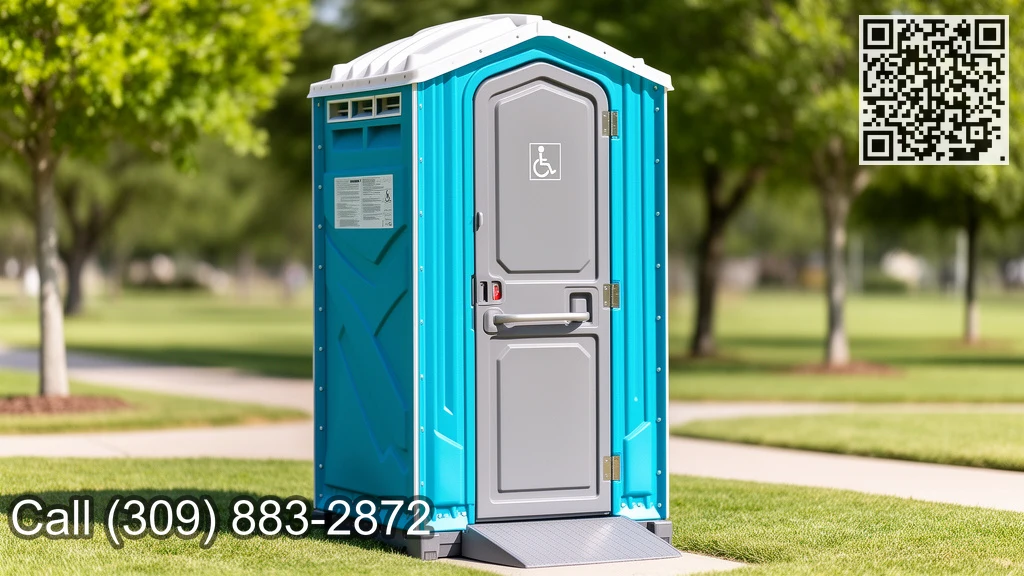
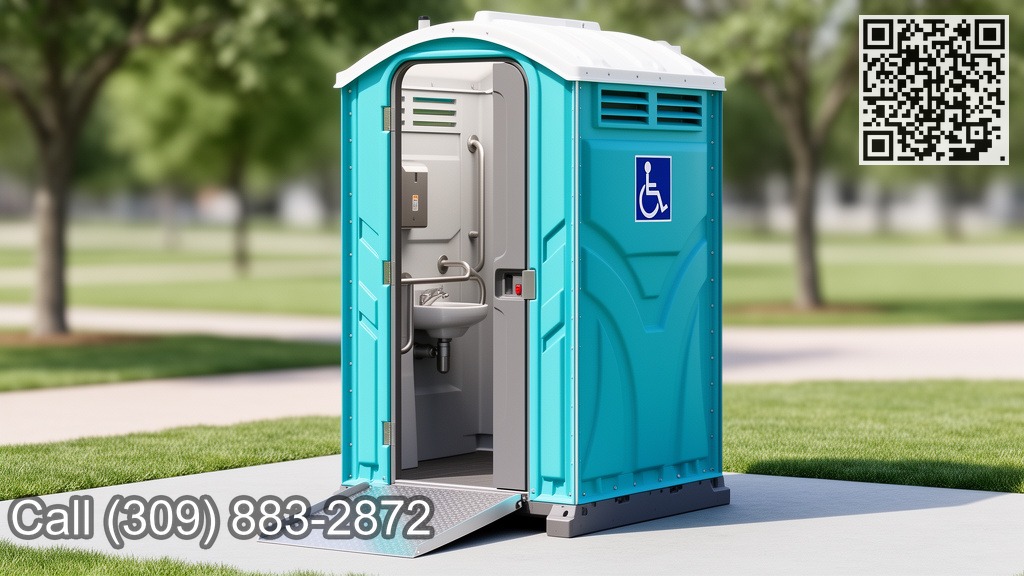
An ada compliant accessible portable toilet is not just a bigger box with a different label. The requirements require more than additional flooring area. The system should meet relevant toilet space technological requirements, including clearances for the component, turning area, and door maneuvering clearances, in addition to relevant water closet clearance policies and get bar requirements.
That difference matters due to the fact that many people delicately use expressions like "wheelchair-friendly" or "handicap device" without truly recognizing what features are necessary. An ada handicap obtainable portable toilet has to sustain real activity and actual use inside the room. A guest may need to go into, transform, position alongside the toilet, shut the door, usage grab bars for transfer, and leave safely. If any type of among those actions is obstructed, the unit may be present but not genuinely usable.
This is one reason experienced event teams ask thorough inquiries prior to validating an ada mobile toilet rental. They do not just ask whether an available device is offered. They ask whether the system is planned to fulfill ADA access assumptions, whether it is effectively recognized, and whether the intended positioning supports obtainable usage once it gets to the site.
There is one more functional layer here. Ease of access is not only regarding the inside of the device. The route to the device and the entrance itself matter equally as much.
The course to the system is part of compliance
An usual preparation error is to focus totally on the bathroom itself while ignoring the travel path causing it. The Accessibility Board advice makes clear that portable easily accessible units must have an easily accessible path and entry. If ramps or touchdowns are required, those components also have to follow ADA technological requirements.
This is where otherwise cautious occasion strategies can untangle. A supplier might supply an ada certified mobile restroom exactly as bought, however if it is placed throughout loosened crushed rock, behind a visual side, at the end of a muddy slope, or where a short-lived ramp arrangement does not fulfill the standard, the result is still a barrier.
On event day, these barriers turn up in very regular means. A guest pauses at the start of a rough path and decides it is not worth the battle. A member of the family needs to ask team for assistance. Somebody who expected independent gain access to has to rely on others. None of that looks remarkable in a site map testimonial, however it matters deeply in the moment.
For that factor, restroom planning need to start at the ground degree, actually. Prior to wrapping up positioning, it aids to walk the path on your own and think of using it with minimal flexibility, a scooter, a pedestrian, or a wheelchair. If the answer is "it could be difficult," it possibly is.
Identification is not a little detail
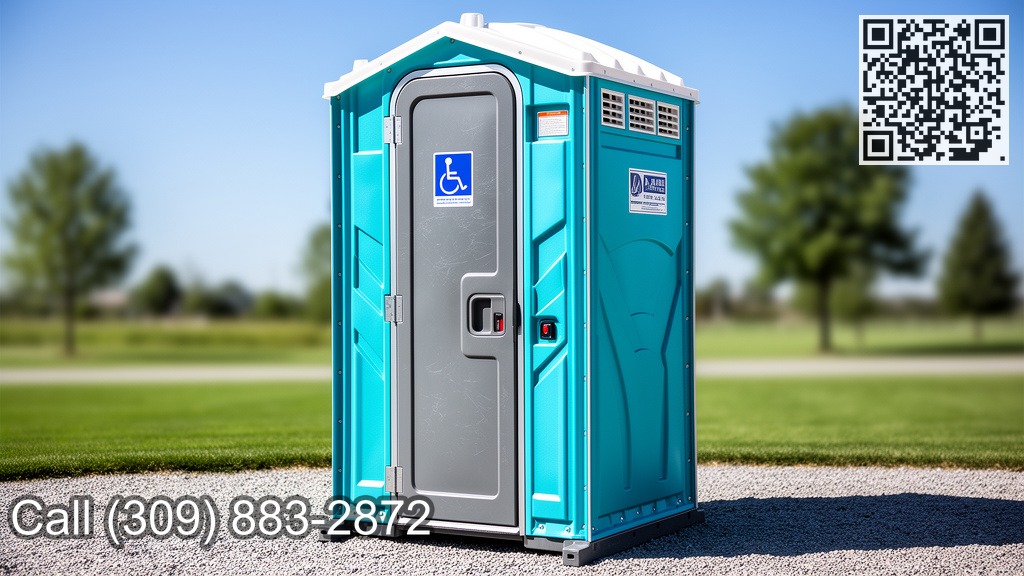
Accessible portable commode systems have to be understood the International Sign of Ease Of Access. This is a certain need, and it serves a sensible purpose. Individuals need to be able to find the device without guesswork.
That might appear obvious, yet in active occasion atmospheres, evident information are commonly the initial to slip. Signs gets blocked by secure fencing. Systems are revolved throughout setup. A row of commodes winds up encountering a crowd-control hallway that makes the markings hard to see. Personnel presume attendees will certainly ask for instructions if required. Numerous will not.
An accessible device that is hard to recognize produces a subtle kind of exclusion. It tells guests that their needs were technically recognized however not thoughtfully accommodated. Excellent identification aids protect against that. It also assists personnel handle questions successfully, specifically when the site is crowded or noisy.
There is a wider concept below. Accessibility functions work best when they are visible, incorporated, and easy to understand. The even more a guest has to work out or translate the configuration, the much less easily accessible it really feels, even if the core need has been met.
Counting systems appropriately at event clusters
The 5 percent regulation seems simple till a site comes to be big sufficient to consist of several bathroom areas. After that organizers have to assume carefully about what counts as a collection and exactly how users will in fact relocate via the venue.
If one collection serves the main gate and one more offers a far-off field or performance location, it is not nearly enough to count on one accessible system at just one location if the obtainable requirement exists across the website. The requirements relate to each cluster of portable single-user toilet systems. That is the functional lesson lots of teams learn after their initial huge event.
A useful method to think of it is not in regards to stock, yet in terms of accessibility factors. Wherever you develop a washroom location for the general public, ask whether that location includes an obtainable choice in the percentage called for. This moves the state of mind from "Do we have one someplace?" to "Can people use toilets where they are, without additional worry?"
Here is a short preparation check that frequently keeps teams out of difficulty:
- Identify each toilet collection on the event map instead of counting all units sitewide as one total.
- Confirm that at least 5 percent of the devices in each cluster are accessible.
- Make sure the easily accessible system is marked with the International Symbol of Accessibility.
- Check the route, entry, and any kind of ramp or landing problems prior to distribution day.
- Recheck positioning after configuration, since site changes usually take place in the last hours.
Those five actions do not replace legal evaluation or vendor proficiency, yet they capture most of the sensible failings that occur between buying and opening.
The compromise between comfort and correct placement
Event sites hardly ever offer ideal problems. The flattest location may be further from the crowd. One of the most main location may produce congestion. A wide path might conflict with power cables, tent risks, or fence. This is where judgment comes in.
I have seen organizers put an ada compliant mobile commode in a remote place since the grade there was better. I have actually additionally seen teams demand a central place even though the method was harsh enough to threaten availability. Neither choice is excellent by default. The far better solution generally originates from resolving the path issue and keeping the unit where individuals normally expect washroom access to be.
That can call for earlier sychronisation with the whole procedures team. The toilet vendor alone can not resolve a poor site plan. If the available route goes across a service lane, somebody may need to reroute traffic. If the ground is unpredictable, the location team may require to address the surface. If a ramp or touchdown is required, its conformity can not be dealt with as an afterthought.
This is among those areas where compassion boosts preparation. When you envision an impaired visitor arriving exhausted, in a group, during warmth or rain, your resistance for "close adequate" normally drops. That is a healthy instinct.
Language matters, however function issues more
In the rental market, you will hear several overlapping phrases: ada portable washroom, ada mobile toilet, ada compliant mobile commodes, ada-compliant mobile bathrooms, and ada compliant obtainable portable toilets. People use them interchangeably, and in casual conversation that is easy to understand. What issues most is not the tag in the quote sheet, but whether the device and its installment satisfy the accessibility demands that apply.
That means asking functional, based inquiries. Is the device meant as an ADA-accessible option? Will it be plainly recognized? Has the positioning been reviewed for easily accessible method and entryway? Does the occasion map treat availability as component of the washroom format, not a side note?
A lot of aggravation can be avoided when the coordinator, rental company, and site staff all use the exact same definition of success. Success is not "an accessible device was provided." Success is "a guest who needs it can discover it, reach it, enter it, maneuver inside, use it, and leave without unneeded trouble."
Where coordinators obtain exposed
The more comprehensive compliance atmosphere around the ADA has only come to be more active, not less. Even outside physical website preparation, accessibility assumptions are obtaining focus throughout sectors. That more comprehensive pattern issues because it reflects a genuine enforcement climate. Event accessibility is not a drowsy back-office issue. It becomes part of a larger understanding that accessibility obligations stay essential across styles, including temporary ones.
For event operators, this means washroom availability must be treated with the very same severity as group safety and security, emergency access, and hygiene planning. It is not rare or specific niche. At virtually any kind of public event, a person will certainly require https://chancewckq402.yousher.com/ada-accessible-portable-washroom-specifications-for-rental-decision-makers the extra area, transforming area, or support features supplied by an ada-compliant portable toilet.
The threat of getting it wrong is not just governing. It is reputational and human. Visitors bear in mind when they were forced into a hard or humiliating situation. Families remember when a basic outing developed into a difficult scramble to find a usable washroom. Those are the minutes that form whether people come back next year.
A realistic discussion with your rental provider
The ideal ada mobile commode rental discussions specify. Obscure demands welcome unclear outcomes. Saying "we need one handicap washroom" typically causes presumptions. Saying "we require available devices in each portable restroom cluster, with accessible courses and clear identification" is much harder to misunderstand.
It likewise assists to talk early. Obtainable supply can be much more restricted than common supply during optimal occasion seasons, especially for weekend breaks when celebrations, races, and area events accumulate. Waiting until the eleventh hour can leave you with less positioning options and even more pressure to compromise.
If you are taking care of a multi-zone occasion, bring a site map to the conversation. Talk with each collection. Explain the surface truthfully. Confirm that is accountable for last positioning and that will certainly verify route problems as soon as various other framework is set up. A tidy quote is just the start. Compliance usually depends upon the last ten feet around the unit.
These questions are worth asking before you lock anything in:
- Which bathroom groupings on our map matter as different clusters for planning purposes?
- Where will certainly each ada easily accessible portable washroom be positioned within those clusters?
- How will certainly participants get to each obtainable device by an available route?
- Will any kind of ramp or landing problems require unique interest at the site?
- How will the units continue to be clearly determined when all secure fencing, barriers, and indications are installed?
That is not overplanning. It is the degree of detail that stops awkward shocks on occasion day.
The distinction visitors can feel
When available restroom planning is succeeded, lots of people hardly see it, which is exactly the point. The easily accessible unit is where it needs to be. The path feels regular. The signs is clear. No one needs a personnel escort. No one has to describe their impairment to a volunteer just to locate a restroom.
When it is done improperly, the contrary happens. The easily accessible system might practically exist, yet every action around it signals that the individual was not actually considered. For a person who takes care of accessibility barriers regularly, that feeling is familiar and exhausting.
Empathetic planning changes that experience. It does not require grand gestures. It needs accuracy, interest, and regard for how people actually relocate through area. With ada certified portable toilets, the law offers the structure, but the high quality of implementation is what visitors remember.
For event coordinators, that is the actual standard to aim for. Not bare minimums. Not presumptions. A bathroom plan that helps individuals who need it most, in the exact same functional, average way it helps every person else.
 Ask ChatGPT
 Ask Grok
 Ask Perplexity
 Ask Claude
 Ask Google AI
 Ask You
❧